Personhood for the St. Lawrence River
Contributors: Rosalind Warner, Geoffrey Garver, Margot Hurlbert, Peter Stoett, Shauna Doll, Yenny Vega Cárdenas, Tim Lash, Will Amos and Maude Barlow
With thanks to Nature Canada, Ecojustice, West Coast Environmental Law, Environmental Law Centre, Legal Rights for the Salish Sea, The Tenàgàdino Alliance / Tenàgàdino Zìbì (Algonquin Anishinabeg), Raincoast Conservation Foundation, McGill University’s Leadership for the Ecozoic (L4E) Centre, Environmental Crime Research Network, and L’Observatoire international des droits de la Nature (OIDN)
A recent Parliamentary report, Sustaining Canada's Freshwater for Today and Tomorrow, proposes that the Government of Canada consider establishing legal personhood for the St. Lawrence River in alignment with local First Nations laws.
At RCEN’s Rights of Nature community, we see this as an important step toward transforming human-Earth relationships.
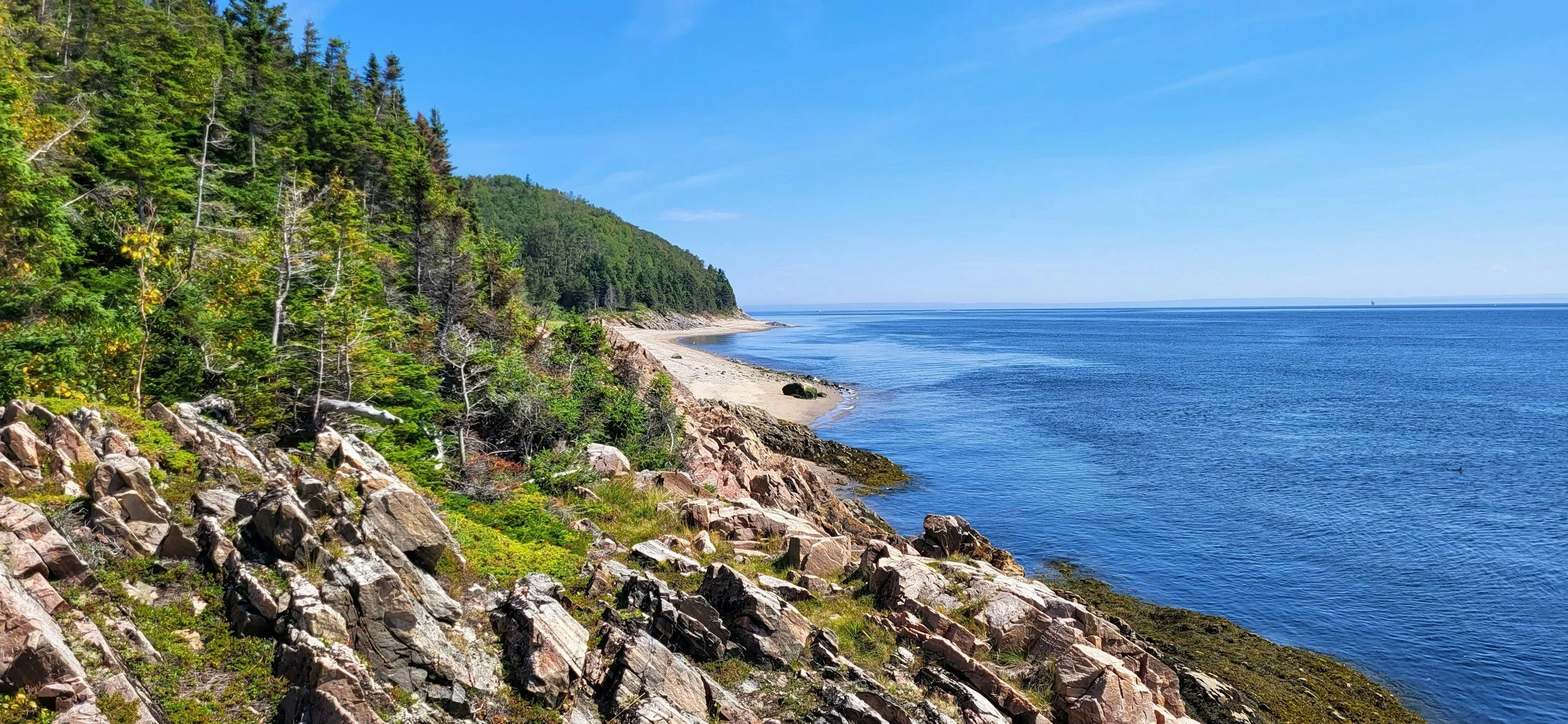
Shoreline image of the St. Lawrence River Estuary
The Standing Committee’s recommendation represents an important first step toward opening a process that would allow the Government of Canada to work with First Nations and Civil Society to develop a legislative framework for the governance of the St. Lawrence River. This could be an opportunity to move from recognition in principle toward concrete legal protection of the River, grounded in the intrinsic realities of the river, and substantially informed by both Indigenous and Crown legal orders and responsibilities.
Legislative initiatives to recognize the legal personhood of the St. Lawrence River have already been introduced at both the federal and provincial (Quebec) levels. On May 5, 2022, Bill C-271, a Private Member’s Bill, was introduced in the House of Commons to recognize the legal personality of the St. Lawrence River and provide for measures respecting its protection. On the same day, a parallel bill, "Projet de loi n° 990, Loi conférant des droits au fleuve Saint-Laurent", was introduced in Quebec’s National Assembly.
These legislative initiatives were followed by the direct recognition of the legal personhood of the St. Lawrence River by the Assembly of First Nations of Quebec-Labrador (AFNQL) on April 19, 2023. This recognition is particularly significant as it reflects an Indigenous-led affirmation of the River’s legal status and relationship with the First Nations of the Territory. Although as varied as the number of First Nations, Indigenous legal traditions tend to incorporate lessons learned from intimate intergenerational observation of and connection to the land and waters and the life they sustain.
Legal personhood for the St. Lawrence should also signal a renewed commitment to the Silver Covenant Chain, the Two Row Wampum and other agreements and protocols of friendship, understanding and mutual respect between Indigenous peoples and European colonizers. As Judge Bourque found in November 2023 in her R v. Montour decision , the Silver Covenant Chain and other agreements with early settlers remain binding, and respecting them means that Indigenous legal traditions such as the Kaianerenkó:wa, the Great Law of Peace of the Haudenosaunee Confederacy, must have grounding in the federal and provincial law of Canada.
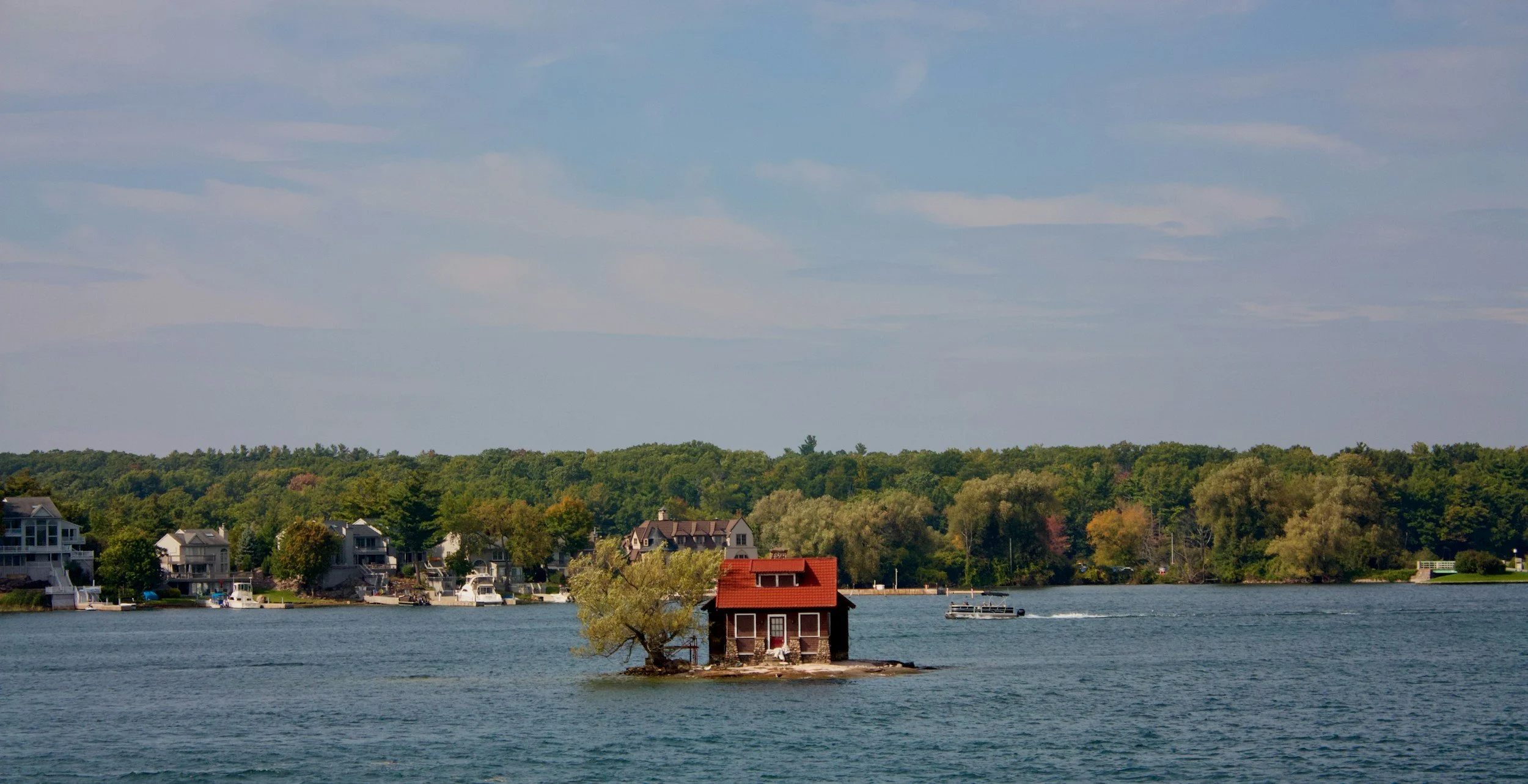
The St. Lawrence River - largest estuary on Earth
The St. Lawrence River is the largest estuary on the planet, and it is facing significant pollution challenges from anthropogenic activity, including contamination from pharmaceuticals in the Montreal region, heavy metals in the Quebec City region, microplastics in the Great Lakes region, nanoplastics in clams and freshwater mussels and risks to species such as Beluga Whales and the Copper Redhorse as well as the 45 million people who occupy the Basin.
As documented in a recent report of the International Observatory on Nature’s Rights (IORN), Quebec’s water-governance regime has evolved through different stages, from an initial concern with water as a resource for human use, to a recognition of water as a human right, and toward recognizing water’s ecological importance as a living environment. However, governance remains fragmented and insufficiently protective when economic and development priorities conflict with ecosystem health. The report highlights a recurring contradiction: governments may publicly commit to river protection while approving projects that create cumulative ecological risks.
The IONR has been actively advancing the recognition of the Saint Lawrence River as a living entity with rights through the Saint-Lawrence River Alliance, a civil-society coalition uniting municipalities, Indigenous partners, environmental organizations, researchers, and others. The Alliance has built public and institutional support for the legal recognition and protection of the River and is working to expand the Alliance. Importantly, 21 municipalities have already adopted resolutions supporting the recognition of the Saint Lawrence River as a rights-bearing entity. This work complements and supports Indigenous-led initiatives and contributes to a broader conversation about the development of collaborative, multi-level forms of ecological governance.
The IONR is currently developing a new strategy to reinvigorate and expand the Alliance, in response to this important opening in the current political and legal context, with the aim of bringing additional allies and experts into the initiative and strengthening its collective capacity to advance the River’s recognition and governance.
In the above-mentioned Parliamentary report, the Conservative Party of Canada (CPC) offers a dissenting opinion, opposing legal personhood in favour of jurisdictional authority and “practical enforcement”; the CPC cites jurisdictional and governance complexities in questioning the viability of legal personhood, arguing that legal personhood would “expand federal reach, blur jurisdictional lines, and mistake process for progress.” The CPC contends that “Canadians do not need freshwater policy built around declarations and legal experiments. They need reliable infrastructure, enforceable rules, and decisions made by the people closest to the watersheds affected.”
Nevertheless, the Standing Committee agreed it "provides a constructive opening ... to refine arguments and engage in dialogue." At RCEN’s Rights of Nature Hub, we agree that this dialogue is needed. In response to the critics, we would argue that the recognition of the Rights of the St. Lawrence would not displace investment in monitoring, infrastructure and enforcement. On the contrary, it would increase the legal obligation to engage in monitoring and enforcement. More fundamentally, the CPC’s response ignores that granting legal personhood to the St. Lawrence or to any natural entity is a step toward transforming human-Earth relationships and highlights human membership within Earth’s communities of life, interdependencies among all their components, and expanded responsibilities that humanity must meet to respect other members of those communities
Legal personhood and practical enforcement are not mutually exclusive: legal recognition can strengthen, not replace, jurisdictional and enforcement mechanisms. A more proactive Canada Water Agency could play a central role in facilitating the necessary discussion. Overall, legal personhood offers an important legal tool and epistemological expansion to address cumulative effects as well as more holistic considerations of socio-ecological-hydrological relations important to both fauna and flora. Moving well past the binary of human versus ‘other’ and ecclesiastical hierarchical structures, the recognition of legal personhood sets aside polarized thinking.
In addition, the Standing Committee’s recommendation ties personhood to alignment with local First Nations laws, which is particularly important in Canada, where First Nations have been leaders in developing and advancing Rights of Nature and related legal innovations. Indeed, the report refers to the recognition of the Magpie River (Muteshekau-shipu) as a legal person by the Innu Nation of Ekuanitshit and the RCM of Minganie. More recently, the Rice Lake (Pemadeshkodeyong ) initiative has advanced through the leadership of the Alderville First Nation in Ontario. Other Indigenous-led initiatives have also emerged around the Great Lakes, the Fraser River, and Lake Winnipeg, reflecting a growing transnational movement in which Indigenous Nations are asserting or recognizing the legal standing, rights, or personhood of natural entities within their Territories. In the Canadian context, the recognition of the legal status of natural entities is not simply an imported legal innovation, but is increasingly being shaped and advanced by Indigenous Nations and their laws, governance systems, and relationships with the natural world.
International precedents can help address concerns about feasibility. The experiences of New Zealand, Ecuador, Bolivia, Panama and Colombia demonstrate that recognizing legal rights to Nature can coexist with constitutional, regulatory and governmental systems, including concrete governance arrangements, guardianship, restoration duties, and institutional responsibilities. Senator Rosa Galvez’s piece on Rights of Nature has highlighted these international precedents including Peru, New Zealand, Bolivia, Ecuador, Bangladesh as evidence of the growing international development of legal rights for Nature and of the potential for Indigenous leadership to contribute to this transformation.
The NDP and Green Party have expressed support for Rights of Nature, while the Bloc Québécois and the Liberal Party have agreed to the initiation of discussions about the legal personhood of the St. Lawrence River. This creates an important opening for broader cross-party dialogue and engagement. We are thrilled that a federal committee has, for the first time, put the possibility of legal personhood for a river that is so central to economic activity, and even Canadian identity, on the record. Subsequent discussions will shine light on, and could help transform, our collective relationship with Nature. Indeed, it may be more appropriate to consider the recognition of Nature’s rights as giving legal Naturehood to humans, rather than legal personhood to Nature.
Authors' views are their own, not necessarily those of RCEN as an organization. For more information about RCEN's Biodiversity Caucus and this project, Epistemic Community of Practice on the Rights of Nature in Canada (Turtle Island), please visit rcen.ca/biodiversity.