17th meeting of the Conference of the Parties
(COP 17)
About
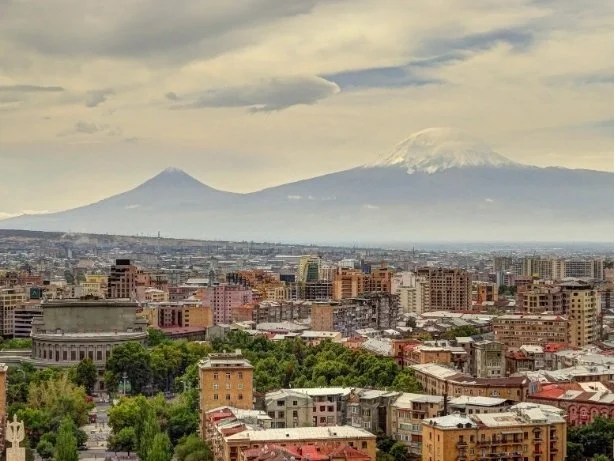
In October 2026, government and civil society will come together for the 17th Conference of the Parties (COP 17) to the Convention on Biological Diversity. Between 10,000 and 30,000 people will convene in Armenia for two weeks to negotiate outcomes for BioDiversity. The Reseau Canadian Environmental Network (RCEN) and Sierra Club Canada are sending delegates to Armenia for COP 17 to bring your points and voice to the summit, and to bring firsthand experience to help shape our directions in Canada.
Biodiversity Matters - Voices and Views for COP 17
In an effort to provide our Network with the opportunity to learn what our delegates are following, and to help inform the messages they bring to the international level, the Biodiversity Steering Committee would like to announce an upcoming webinar:
Biodiversity Matters – Voices & Views for COP 17.
Thursday, October 8, 2026
2:00 PM PDT | 4:00 PM MDT | 5:00 PM EDT | 6:00 PM ADT | 6:30 PM NDT
This webinar is an opportunity to:
Learn more about the COP 17 agenda and our key areas of focus
Meet our delegates, Hannah Carey and Shauna Doll
Hear about the issues we’ll be following and advocating around
Share your ideas, advice, and perspectives to help shape our messages for COP 17
The full agenda is below.

What will we be focusing on?
As we move through the webinar and explore the COP 17 agenda, we’ll keep one question at the centre of the conversation:
What do we need to see — or not see — in the decisions coming out of COP 17 to support positive outcomes for biodiversity in Canada?
We’ll consider what meaningful progress could look like, what commitments and actions are needed, and what decisions could help strengthen biodiversity protection and implementation in Canada.
A key focus will be Agenda Item 14: Mainstreaming of biodiversity and engagement with subnational governments, cities and local authorities, as well as progress on the Kunming-Montreal Global Biodiversity Framework (KMGBF) and how we can strengthen its implementation. See the full COP 17 agenda here.
These discussions connect with many of the other issues on the COP 17 agenda and provide an important opportunity to consider how biodiversity commitments can translate into meaningful action at the national, regional, and local levels.
Four connected areas will guide the conversation, as well.
01
The Kunming-Montreal Global Biodiversity Framework
The KMGBF reverberates through the entire agenda. A major part of the work at COP 17 is taking stock of the mid-term review of this framework. The Global Review Document helps understand the reflection of countries self-reporting on the implementation of KMGBF.
For more context, see CBD’s Kunming Dialogue and the meeting documents.
While we could focus on any of the five areas outlines, we will consider the whole-of-government and whole-of-society approaches.
02
Protected Areas
The two areas that will be considered are:
Forests and Other Effective Conservation Measures (OECMs)
Oceans and Ecologically or Biologically Significant Marine Areas (EBSAs)
For more context, see CBD’s Programmes of Work, as well as the compilation of draft decisions for COP 17 (items 17b and 17c).
03
Subnational and Local Government
For more context, see CBD’s meeting document on the engagement and roles of subnational governments and authorities on their implementation of the KMGBF.
04
Rights of Nature
The Rights of Nature is a conversation that is gaining momentum globally. Within the KMGBF, there is language that recognizes biodiversity as more than property.
For more information, see:
Full webinar objectives and agenda
Objectives:
Present thoughts on why it is relevant for Canadian ENGOs to participate internationally
Meet our delegates, Hannah Carey and Shauna Doll
Hear about the issues we’ll be following and advocating around
Grant the Network the opportunity to contribute their vision and advice on the items of focus
Outline next steps and share how to receive information on participating virtually from Canada
Agenda:
10 min Introductions
10 min Meet the delegates
25 min Kunming-Montreal Global Biodiversity Framework
15 min Protected Areas: Forests and Other Effective Conservation Measures
15 min Protected Areas: Oceans and Ecologically or Biologically Significant Marine Areas
25 min Subnational and Local Government
15 min Rights of Nature
10 min Closing and Next Steps
Please note: Comments will not be attributed to individual participants and no recording of the session will be shared publicly. The session will be recorded internally to support delegate preparation and written outcomes.
Meet our delegates!
Shauna Doll - Halifax, Nova Scotia
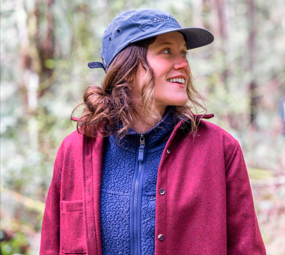
Shauna Doll (she/her) is a settler originally from Treaty 8 Territory in what is presently known as northern Alberta. She is a curious and passionate conservation scientist and restoration practitioner. She has a bachelor’s degree in Environmental Sustainability and a master's degree in Resource and Environmental Management, both from Dalhousie University in addition to a Professional Certification in Ecological Restoration from University of Victoria. Her experience is rooted in coastal forests, notably the Wabanaki/Acadian forests characteristic to New Brunswick and Nova Scotia, and Coastal Douglas-fir forests found along the shores of the Salish Sea. She has worked on Canada’s east and west coasts as well as abroad but now calls the Eastern Shore of Mi’gmagi (Nova Scotia) home. Shauna works in local government and in the not-for-profit sector. She is a Steering Committee member for both the Canadian Environmental Network Biodiversity Caucus and the Nova Scotia Invasive Species Council.
Hannah Carey - Sherbrooke, Quebec
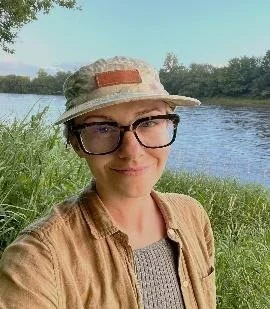
Hannah Carey (she/her/elle) grew up and currently resides in Kchi Nikitawtegwak (Abenaki) or Sherbrooke (English); this place is where her connection to nature started and has continued to evolve throughout her life and career. She pursued her interest in the natural world by completing a Bachelor of Science from Bishop’s University and a master’s of Natural Resources Management from the University of Manitoba. During her career, she’s been privileged to contribute to various conservation research projects and environmental work with an array of species, and within various ecosystems and communities. In life, she’s discovered new avenues to support nature and biodiversity – especially as an amateur gardener attempting to support more biodiversity in her own backyard. Hannah currently works as the Québec Program Coordinator for the Youth EcoStewards program, initiated by Invasives Canada. She is a board member with the Canadian Environmental Network and secretary for the Biodiversity Caucus.
Looking for more ways to support?
We need your help to get our delegates to Armenia!
Our goal to get both delegates to Armenia is $9,000 to cover flight and carbon offset, insurance, lodgings, and a stipend for daily expenses. That means 90 people giving $100 gets us to the mark. Any amount that you can give will help greatly. Are you one of our COP 17 enablers? Can you or your organization help? We hope the answer to both questions is yes. This is a charitable donation and you will receive a tax receipt from Sierra Club. If you can see yourself being part of our Team COP 17, you can donate by clicking the button below.
Please make sure you enter COP 17 in the comment section. If you have questions, want to figure out how to give flight points or maybe have a connection to lodgings in Yerven, or any other idea or question, please reach out to the dedicated email for this work: rcenCOP17@sierraclub.ca
For further information, please contact: biodiversity@rcen.ca